
We look after gardens across Balwyn and Balwyn North, on regular visits or as one off work. No two gardens here need the same thing, so we work out what yours needs before anything starts.
No commitment. We call, you decide.
The short answer
Weeds n’ Wonders provides garden maintenance in Balwyn, postcode 3103, and Balwyn North, 3104. Work covers mowing and edging on large open blocks, lawn health and top dressing, shrub and tree reduction, hedging, mulching and green waste removal, on a regular schedule or as one off work.
Balwyn has some of the largest lawns of the suburbs we cover. Generous post war blocks, wide back gardens and comparatively little mature canopy mean lawn is the dominant element in most gardens here, and it is where most of the maintenance effort goes.
Two local conditions shape how those lawns behave. Balwyn sits on some of the higher ground in Melbourne’s east, so gardens here get more sun and more wind than neighbouring suburbs and dry out faster in summer. And a significant share of the suburb has been rebuilt in recent decades, which means a lot of lawn sits on builder’s fill rather than original topsoil. Those two facts explain most of the lawn problems in Balwyn.
Local knowledge
Balwyn is a suburb of two eras sharing the same streets, and they need quite different things.
Unlike the frontage driven gardens further south, Balwyn’s generous blocks put the real garden behind the house. Big open lawns, room for a trampoline and a cricket pitch and still space left over. That means volume rather than detail. A Balwyn visit is more mowing and less fiddly edge work than a comparable garden in Camberwell.
Balwyn and Balwyn North sit high in the eastern suburbs. More sun reaches these gardens, and considerably more wind. Lawns dry out faster, exposed beds lose moisture quickly, and young plants take longer to establish than they would in a sheltered garden a few kilometres away.
Balwyn has seen extensive rebuilding, and new houses come with new turf. Instant lawn laid over compacted builder’s fill, often with only a shallow layer of topsoil underneath, looks perfect for the first year. The second summer is when it tells you the truth.
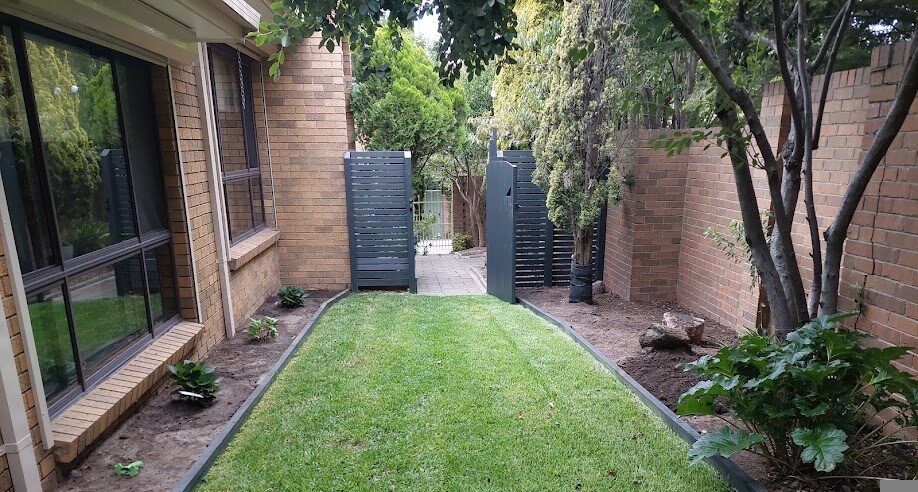
Where a 1950s or 1960s home survives, the planting around it usually does too, and sixty years is a long time. Conifers planted as a two metre screen are now eight metres. Camellias and photinias that were foundation shrubs have swallowed the windows. These gardens do not need clearing. They need editing, by somebody who can tell what is worth keeping.
On the higher streets, water runs off before it soaks in, mulch migrates downhill in heavy rain, and the top of a sloping bed is always drier than the bottom. It is a small thing that explains a lot of unexplained plant failures.
Local problems
Five things come up again and again in Balwyn gardens. Most of them trace back to two facts: the ground here is high and exposed, and a lot of the soil arrived with the builder.
| The problem | Why it happens in Balwyn | What actually works |
|---|---|---|
| A new lawn that was perfect in year one and patchy in year two | Instant turf laid on compacted builder’s fill with a shallow topsoil layer. The roots run out of soil to grow into, so the lawn thins the moment it is stressed. | Relieve the compaction, top dress gradually over several visits to build depth, feed through the growing season and cut high. It is fixable, but over seasons rather than in one visit. |
| A big lawn that costs a fortune to keep green in summer | Elevation, full sun and wind together drive evaporation harder here than in the sheltered suburbs. A large lawn on high ground loses a lot of water. | Warm season grass suits these conditions far better than cool season. Raise the cut, water deeply and infrequently, and consider whether every square metre of that lawn is actually being used. |
| Plants on the exposed side that never establish | Wind. Balwyn’s high ground gets steady exposure that scorches new growth and dries young root systems before they take hold. | Screening or hedging on the windward boundary changes what is possible behind it. Establish the shelter first, then plant. |
| Sixty year old shrubs that have taken over | Foundation planting from the 1950s and 1960s reaching full size decades later. Conifers, camellias and photinias planted as small shrubs now dominating the garden. | Staged reduction on the species that tolerate it, and honest advice on the ones that do not. Cutting an old conifer back into bare wood will not work, so those decisions need making deliberately. |
| Mulch and water running off a sloping bed | Gravity. On the higher streets, water sheds off the surface before it penetrates and fine mulch migrates downhill in a storm. | Coarser mulch that knits together rather than fine grades, and watering slowly enough that it soaks rather than runs. |
Services
The bulk of the work in this suburb. Large areas cut at the right height for the season, which matters more here than anywhere because of the sun and wind exposure.
Lawn, beds, hedges and paths in one visit. On a large Balwyn block this is far more efficient than booking services separately.
Sixty year old planting brought back to a size that suits the garden, with honest advice on what will and will not recover from a hard cut.
Boundary hedges do real work here as windbreaks, not just screening. A dense hedge on the exposed side changes what will grow behind it.
Bindii is the common complaint on large family lawns, and a big lawn means a bigger job if the winter window is missed.
Coarser grades on the sloping beds so it stays where it is put, laid deep enough to hold moisture through an exposed summer.
Reducing decades of overgrown planting produces more waste than any other job in this suburb.
Lawn height raised before the heat, bindii treated in winter, beds mulched before summer dries them out.
Our work
Gardens we look after in Balwyn and Balwyn North. Every photo is our own work in this suburb.
Lawn care. Large back lawn brought back after a dry summer, height raised and edges recut.
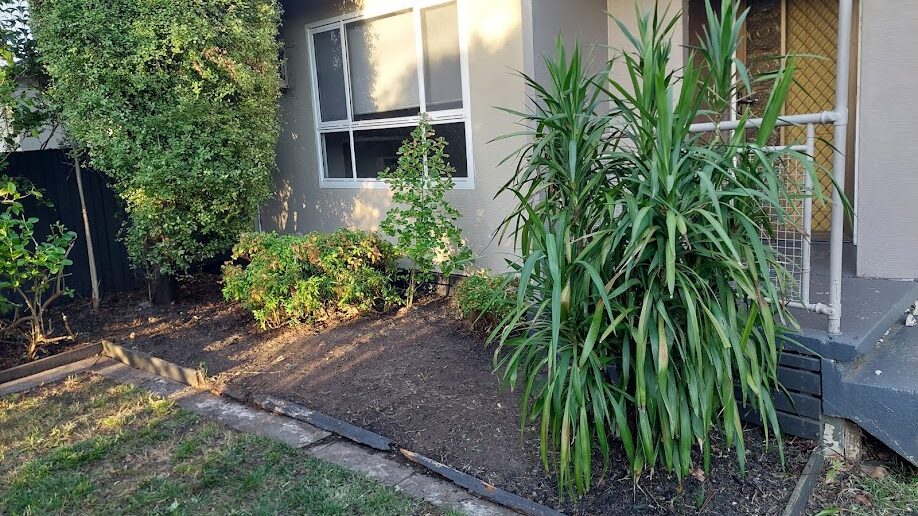
Shrub reduction. Overgrown planting cut back off the window and the bed weeded.
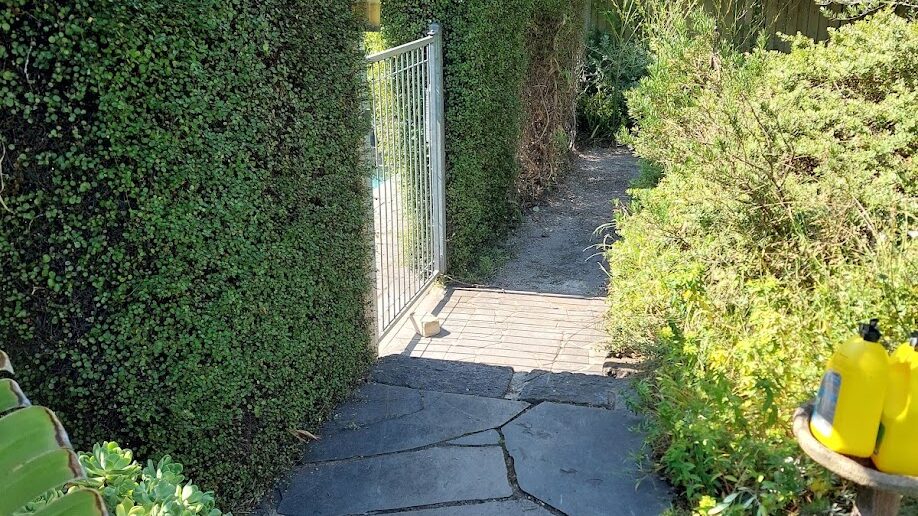
General maintenance. Side path hedge squared up and the path cleared.
Practical information
Rebuilt blocks usually end up with compacted subsoil and a thin layer of topsoil under the turf. It is the single most common reason a new Balwyn lawn struggles in its second year. It is fixable, but it takes top dressing over several seasons rather than fertiliser.
Exposed high ground loses moisture to wind as well as heat. A garden here needs more water than an equivalent garden in a sheltered street, and it needs it delivered slowly enough to soak in rather than run off.
Balwyn sits in the City of Boroondara, and established trees over certain sizes are protected. On rebuild and renovation blocks this catches people out, because a tree that is inconvenient for a build may still need approval before it is touched, and pruning can be covered too. Worth confirming before plans are finalised rather than after. More detail on our tree pruning page.
Couch, kikuyu and buffalo handle Balwyn’s sun and wind far better than cool season grasses do. They go dormant and lose colour over winter, which is normal and not a dead lawn.
The native garden on Parring Road is a genuinely useful reference for anyone in Balwyn wondering what will cope with this ground and this exposure. It costs nothing to walk through and it will tell you more than a plant label will.
Where we work
Balwyn and Balwyn North shown as an area we service. We are a service area business, not a shopfront.
FAQ
Almost always the soil underneath rather than the turf itself. New builds leave compacted subsoil with a shallow topsoil layer, and instant turf looks perfect while it lives on its own root mat. Once that runs out, the roots have nowhere to go. Relieving compaction and top dressing gradually over several visits builds the depth it needed from the start.
Warm season grasses. Couch, kikuyu and soft leaf buffalo all handle Balwyn’s sun and wind far better than cool season grasses like ryegrass and fescue, which struggle through summer on exposed high ground. Warm season lawns lose colour over winter, which is dormancy rather than death.
Yes, both 3103 and 3104. They sit in the same service run, so scheduling either is straightforward.
Coarser mulch. Fine bark and tea tree mulch move in heavy rain, while hardwood chip knits together and holds. Watering more slowly also helps, because on a slope fast water runs off before it can soak in.
With deciding what is worth keeping. Most gardens of that era have good structure buried under sixty years of growth, and clearing everything loses the best part of it. We reduce the species that tolerate it in stages, and give you an honest answer on the ones that struggle to come back from a hard cut, particularly older conifers.
Most large Balwyn lawns need cutting fortnightly through the growing season. Warm season grass grows fast in this much sun. Over winter it slows right down and four weekly is comfortable.
Yes, and it is worth considering on an exposed block where keeping a large lawn green through summer is expensive in water and time. Converting part of it to mulched planting or a paved area reduces both, and often improves how the garden is actually used.
No. Most of our Balwyn clients leave us access and come home to a finished garden. You get a reminder the day before we come. Regular clients often leave a spare key with us if they are comfortable with that.
Nearby
Balwyn sits at the top of our patch. These are the suburbs immediately around it.
Directly south, similar era housing with more emphasis on the frontage
West, older gardens under much heavier canopy
South west, denser housing and courtyard gardens
Nearby but not listed? Call us. If you are close we can usually help.
Booking
Leave your details and we will call you back, usually by the next business day. Tell us roughly how big the lawn is and we can give you a useful answer on the phone.
No commitment. We call, you decide.