
Mulch is the cheapest thing you can do for a garden and the easiest to get wrong. We weed the beds first, lay it at the right depth, and keep it off the stems.
No commitment. We call, you decide.
The short answer
Mulching is covering the soil surface in garden beds with a layer of organic or mineral material. It does three things at once. It holds moisture in the soil, it blocks light so weed seeds cannot germinate, and as organic mulch breaks down it feeds the soil underneath. Weeds n’ Wonders supplies and lays mulch across Melbourne’s eastern and north eastern suburbs.
Depth is what decides whether mulch works. The right depth is 50 to 75 mm. Under 50 mm, light still reaches the soil and weeds germinate straight through it. Over 100 mm, light rain cannot get past the mulch to the soil, and the bed can end up drier than it was before.
Order matters just as much. Beds are weeded first, then mulched. Mulch laid over weeds simply delays them.
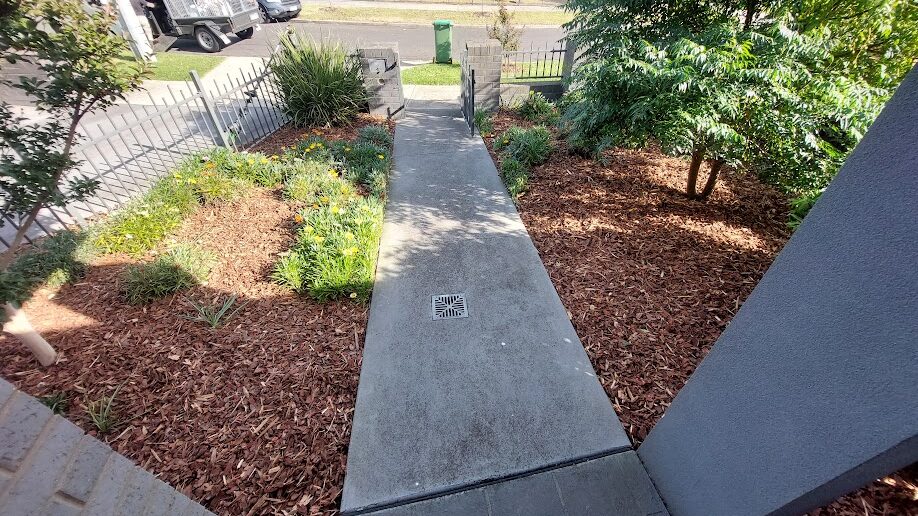
The same front garden before and after. Beds weeded, then mulched with brown pine bark. Our work, our photo.
What you get
Weeds removed at the root before anything goes on top of them.
We source it and bring it. You do not need to arrange anything.
Even depth across the bed, not thick in the middle and thin at the edges.
A gap left around every stem and trunk to prevent collar rot.
Beds edged so the mulch holds its line and does not spill onto lawn and paths.
Paths and driveways blown down before we leave.
Method
Mulch is not automatically right everywhere. These are the calls we make on site.
| The situation | What we do | Why |
|---|---|---|
| Established garden beds with shrubs and perennials | Mulch at 50 to 75 mm, gap left at every stem | The standard case. This is where mulch does the most work for the least money. |
| Newly planted beds | Mulch, but watch the depth around small plants | New plantings fail more often from being buried than from anything else. Depth stays consistent, the gap around each stem gets bigger. |
| Around established tree trunks | Mulch out to the drip line, never against the trunk | Mulch piled against a trunk holds moisture on the bark and rots the collar. This kills more suburban trees than drought does. |
| Vegetable beds and annual borders | Fast breaking mulch such as sugar cane or lucerne | These beds are turned over constantly. Long lasting bark mulch is the wrong tool and gets in the way. |
| Native gardens | Coarse woodchip or leaf mulch, laid lighter | Natives are adapted to lean soil and light leaf litter. Rich composted mulch on a native bed can do more harm than good. |
| Steep beds and slopes | Coarser, heavier mulch, not fine grades | Fine mulch washes off a slope in the first serious rain. Coarse chip knits together and stays put. |
| Beds full of running weeds such as couch or oxalis | Weed thoroughly first, and expect a follow up | Mulch suppresses seeds. It does not stop a runner or a bulb already in the bed. Anyone who says otherwise has not come back to check. |
| Existing mulch still 40 mm deep or more | Top up rather than replace | Removing sound mulch to lay new mulch is money spent on nothing. Topping up costs a fraction and works the same. |
Local knowledge
Different mulches suit different Melbourne gardens, and how long they last can vary depending on the product, application depth and conditions in the garden. We generally recommend topping up mulch when it has broken down or thinned enough that it is no longer providing good coverage.
| Mulch | Best for | Typical depth | What to know |
|---|---|---|---|
| Brown pine bark | General garden beds, established gardens and landscaped areas | 50 to 75 mm | Our most commonly used garden mulch. Provides a neat finish while helping suppress weeds and protect the soil. |
| Sugar cane mulch | Vegetable gardens, edible gardens and new plantings | Around 50 mm | A lightweight organic mulch that breaks down relatively quickly and adds organic matter to the soil. |
| Pea straw | Vegetable gardens and productive garden beds | 50 to 75 mm | Another organic option for productive gardens, that breaks down quickly and feeds the soil. |
| Gravel, pebbles and scoria | Decorative, modern and lower water garden areas | Depends on material and application | Long lasting mineral options that provide a very different finish to organic mulch and are commonly selected for appearance. |
Other mulches are available where a garden calls for them, including hardwood and eucalypt woodchip, composted garden mulch, lucerne, leaf mulch and tea tree mulch. We can source these on request, but the four above are what we recommend and use day to day.
Not sure what suits your beds? We will recommend on the first visit, based on what is planted and how the beds are used.
The pattern
Clients often say their mulch vanished within a year. It usually did, and there are four reasons.
Anything under 50 mm looks like mulch on the day and stops working within weeks. Weeds germinate straight through it because light still reaches the soil.
Organic mulch is meant to decompose into the soil. Sugar cane is gone in months. Composted mulch in a year or two. That is the mulch doing its job, not failing.
Fine mulch on a slope washes down in heavy rain. Light mulch in an exposed garden blows into corners. Birds take it out of the beds and so does the wind.
Mulch is not a one off. A bed mulched once and left will be back to bare soil within two years.
None of this is a reason to skip mulching. Bare soil costs more in water, weeding and replaced plants than mulch ever will. It is a reason to top up rather than wait for it to be gone.
Rhythm
Most Melbourne beds want a top up once a year. Late winter into early spring is the best window, because it goes on before the weed season starts and before the soil dries out for summer.
How often depends on the mulch, the depth it was laid at and the conditions in the garden. Vegetable beds mulched with sugar cane or pea straw need topping up more often than general garden beds.
Topping up is far cheaper than remulching. If the existing layer is still 40 mm or deeper, a light top up brings it back to depth for a fraction of the cost of starting again.
Pricing
Mulching is priced in two parts, and we tell you both before anything is ordered.
The visit. This covers weeding the beds, preparing them and spreading the mulch.
The mulch itself. Charged at cost by the cubic metre, and it depends on what your garden needs.
We measure the beds and tell you how many cubic metres they need before you commit to anything.
Before and after
Real Melbourne garden beds we have weeded and mulched. Every photo is our own work.
Front beds weeded and edged, then mulched to depth so they hold through summer.
Whole garden reset. Beds cleared, edges recut and fresh mulch laid.
Reviews
Rated 5 out of 5 on Google.
Service areas
Weeds n’ Wonders supplies and lays garden mulch in the following suburbs.
Mulching in Kew
Mulching in Camberwell
Mulching in Hawthorn
Mulching in Balwyn
Mulching in Ivanhoe
Mulching in Toorak
Nearby but not listed? Call us. If you are close we can usually help.
Related services
Beds are weeded before mulch goes on. Booked together, the two are the single most effective thing you can do for a garden bed.
Annual mulch top ups folded into a regular visit, so the beds never get back to bare soil.
For beds that need clearing out before new mulch can go down.
FAQ
Mulch should be laid at 50 to 75 mm. Below 50 mm, enough light reaches the soil for weed seeds to germinate straight through it. Above 100 mm, light rain cannot penetrate to the soil, and the bed can end up drier than it was before mulching. Depth is the single biggest factor in whether mulch works.
For general garden beds, pine bark or composted garden mulch at 50 to 75 mm suits most Melbourne gardens. Native beds do better with coarse hardwood chip or leaf mulch. Vegetable beds want a fast breaking mulch such as sugar cane, pea straw or lucerne. The right choice depends on what is planted and how the bed is used, not on price alone.
Mulching is priced in two parts. The visit covers weeding, bed preparation and spreading. The mulch itself is charged at cost by the cubic metre and varies by type. How much mulch a garden needs comes down to the area of the beds and the depth it is laid at, so we measure the beds and give you the volume before anything is ordered, and the quote itself is free.
Late winter into early spring is the best window. Mulch goes down before the weed season starts and before the soil dries out for summer, which is when it does the most work. Mulching in autumn also works well.
Mulch stops weed seeds germinating, because it blocks the light they need. It does not stop weeds already established in the bed, and it does not stop running weeds such as couch or bulb weeds such as oxalis, which push through from underground. Beds need to be properly weeded before mulching for it to hold.
Only if it is dug into the soil. Fresh woodchip mixed into soil draws nitrogen while it breaks down. Mulch laid on the surface, which is how it should be used, only interacts with the top few millimetres and does not affect the root zone. This is one of the most common pieces of bad garden advice going around.
Most Melbourne beds need a top up once a year, though it varies with the mulch used, the depth it was laid at and the conditions in the garden. Vegetable beds mulched with sugar cane or pea straw need topping up more often. If the existing layer is still 40 mm or deeper, a top up is enough and costs far less than starting again.
Yes, and it is one of the best things you can do for an established tree. Mulch goes out towards the drip line, never against the trunk. Mulch piled up against a trunk holds moisture on the bark and causes collar rot, which kills more suburban trees than drought does.
We supply and deliver it. You do not need to order anything or be home for a delivery. Mulch may sit on the driveway for a short time, but we generally book deliveries for the same day we are visiting. If you would rather supply your own, we will spread it.
Weeds n’ Wonders covers Melbourne’s eastern and north eastern suburbs, including Kew, Camberwell, Hawthorn, Balwyn, Ivanhoe and Toorak.
Booking
Get a call back. We will weed the beds, measure what they need, tell you both numbers, and lay it properly.
No commitment. We call, you decide.