
We look after gardens across Camberwell and Camberwell North, on regular visits or as one off work. What a garden needs depends on the garden, so we work that out with you rather than applying a set list.
No commitment. We call, you decide.
The short answer
Weeds n’ Wonders provides regular garden maintenance in Camberwell, postcode 3124, and the surrounding Boroondara area. Services include lawn mowing and edging, weeding, hedge trimming, tree pruning, mulching and green waste removal, on regular visits or as one off work.
Camberwell gardens are different in shape to those in neighbouring Kew. The suburb’s interwar and Californian bungalow housing sits on generous blocks with wide street frontages, deep front lawns and long straight edges along paths and driveways. There is more open sun here and less mature canopy overhead than in Kew.
That shape changes where the work is. In Camberwell, lawn condition and edge definition carry the appearance of a property more than anything else. A well cut lawn with clean lines makes a Camberwell frontage. A patchy lawn with soft edges undoes it, no matter what else is planted.
Local knowledge
Camberwell was largely built between the wars, and the gardens still follow the plan those houses were designed around.
Californian bungalows and interwar homes here were built to sit back from wide streets behind an open lawn, usually with a straight path to the door and low planting at the boundary. The garden is symmetrical and deliberately uncluttered. It was never meant to be busy, which means there is nothing to hide behind. If the lawn is thin or the edge is soft, that is the whole front of the house.
A lot of Camberwell is family territory. The back lawns are cricket pitches, trampoline sites and dog runs, and they carry wear that a purely ornamental lawn never does. A lawn under real use needs a different approach to one that is only looked at, and pretending otherwise is how they end up bare in the middle.
Under a large open lawn, clay compacts under foot traffic and then repels water in summer. This is why so many Camberwell lawns develop brown patches in January that watering does not fix. The water is not getting in. It is running off a hard surface and away.
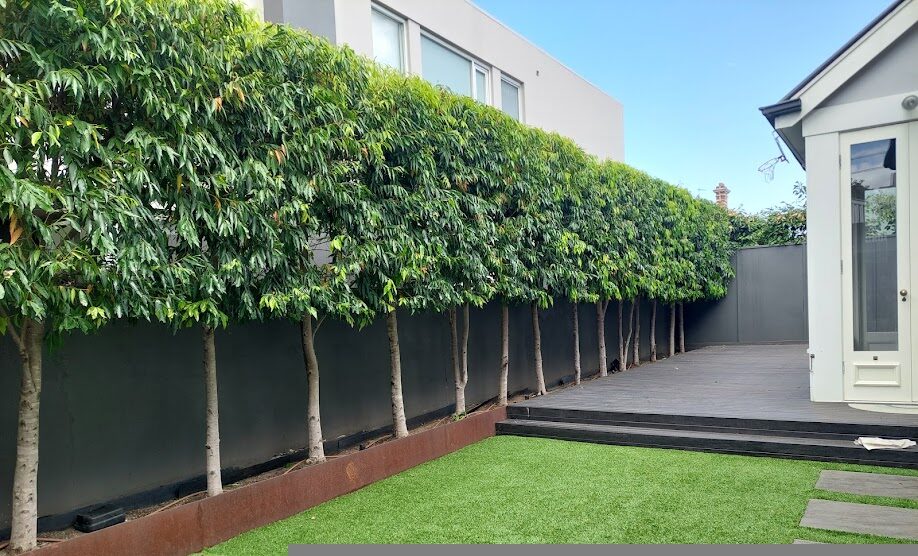
Fewer gardens sit under a heavy canopy here, which makes lawn genuinely viable across most of the suburb. It also means faster growth through the warm months and more work between visits through the growing season.
A typical Camberwell frontage has lawn meeting a path, a driveway, a nature strip and usually a garden bed. That is four separate edge lines on the front alone. Edging is the most time consuming part of a Camberwell visit and it is the first thing cut when someone is working to a price.
Local problems
Five things come up again and again in Camberwell gardens. Most of them start with the same two facts: a large open lawn, and clay underneath it that hardens off in summer.
| The problem | Why it happens in Camberwell | What actually works |
|---|---|---|
| Brown patches in summer that watering does not fix | Compacted clay under a large lawn turns water repellent once it dries out. The water runs off rather than soaking in, so the roots stay dry no matter how long the sprinkler runs. | Break the surface, water deeply and infrequently rather than daily, and raise the mowing height so the soil is shaded. A wetting agent helps on the worst areas. |
| A worn strip through the middle of the back lawn | Family use. Kids, dogs and the same walking line every day compact the soil until grass cannot root into it. | Relieve the compaction, raise the cut, and accept that a used lawn needs a path or a tougher grass in the worn line rather than constant reseeding. |
| Soft, undefined edges that make the whole frontage look unkempt | Camberwell frontages have long edge lines against paths, drives, nature strips and beds. Edging takes real time, so it is the first thing skipped. | Cut every edge every visit, not every second visit. On these houses the edge does more visual work than the mow does. |
| Couch or kikuyu running out of the lawn into the garden beds | Large warm season lawns send runners sideways all summer, and there is usually nothing physical stopping them reaching the beds. | Trace and lift the runners rather than cutting the tops, and keep a clean physical edge as a barrier. Mulch alone will not stop a runner. |
| Nature strip left to go its own way | Nobody is entirely sure whose job it is, so it becomes the one untidy element in front of an otherwise sharp garden. | It can be included in the visit if you want it done. It sits directly in front of the property and it is what people see from the street. |
Services
The main event in this suburb. Cut at the right height for the season, with all four frontage edges done every visit rather than every second one.
Lawn, edges, beds and paths in one visit. On a Camberwell block this is usually the most efficient way to keep a large open garden sharp.
Bindii and clover are the common complaints here, because they establish wherever a used lawn has thinned. Treated in winter, well before anyone feels them underfoot.
Boundary and low frontage hedges, cut to a straight line. On a symmetrical bungalow frontage, a hedge that wanders is very visible.
Border beds along the frontage and boundary, mulched to hold moisture through the summer dry and keep the lawn runners out.
Garden trees kept off roofs and gutters, and thinned where they have started shading the lawn they sit beside.
Large lawns and long hedges make more waste than a fortnightly bin holds, particularly after a boundary hedge cut.
Lawn height raised before summer, bindii dealt with in winter, beds mulched in late winter.
Our work
Gardens we look after in Camberwell. Every photo is our own work in this suburb.
Lawn care. Front lawn brought back after a dry summer, all four edges recut along path, drive and nature strip.
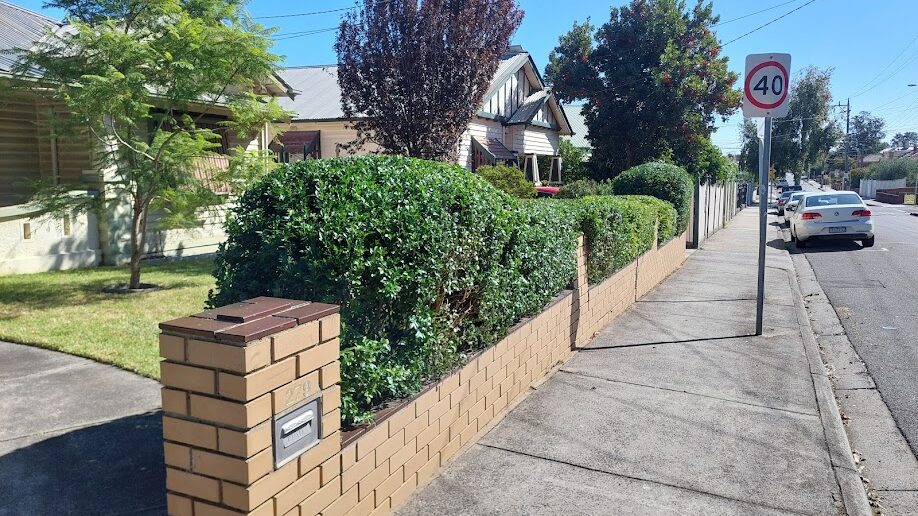
General maintenance. Frontage tidied and the front hedge trimmed back to a clean line.
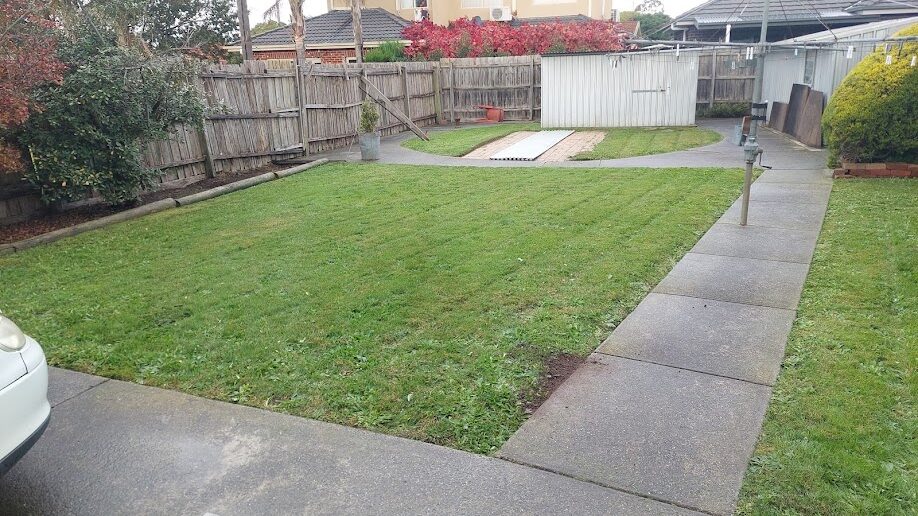
Weed management. Weeds treated across a back lawn and the lawn brought back to even cover.
Practical information
The strip between your fence and the kerb is council land, but maintaining it falls to the property owner in practice. In a suburb where frontages are this visible, an unmown nature strip undoes an otherwise sharp garden. We can include it in the visit.
Camberwell’s clay based soil takes water slowly. Ten minutes a day mostly evaporates. A long soak once or twice a week reaches the root zone and builds a lawn that survives February.
The most common mistake in this suburb. A lawn cut short in December has no leaf to shade its own soil, and on compacted clay that is exactly how the brown patches start. Height goes up before the heat, not after it.
Camberwell sits within the City of Boroondara, which protects trees over certain sizes, and pruning can be covered as well as removal. We check before starting. There is more detail on our tree pruning page.
Properties on Burke Road, Riversdale Road and around Camberwell Junction can be awkward to park near at busy times. Mention it when you enquire and we will schedule your visit accordingly.
Where we work
Camberwell shown as an area we service. We are a service area business, not a shopfront.
FAQ
Yes, we can include it in a regular visit. The nature strip sits directly in front of your property and is what people see from the street, so leaving it out makes little sense. Maintaining it falls to the property owner in practice, even though the land itself is council owned.
Because the water is not getting in. Compacted clay under a large lawn becomes water repellent once it dries out in summer, so the water runs off the surface and away instead of soaking to the roots. Deep infrequent watering, relieving the compaction and raising the mowing height all help far more than watering more often does.
Yes, but it needs a different approach to an ornamental lawn. A used lawn is cut higher, needs its compaction relieved, and does better with a tougher grass through the worn lines. Constant reseeding of a walking track never works, because the problem is the soil underneath rather than the seed.
Often, yes. Minor unevenness can be improved by top dressing gradually over a few visits rather than in one go. Significant unevenness usually points to something underneath, such as settled fill or old tree roots, and it is worth identifying the cause before spending money on the surface.
Tracing and lifting the runners, then keeping a clean physical edge between lawn and bed. Cutting the tops off achieves nothing, because the runner simply continues underground. Mulch will not stop it either, since a runner does not need light to travel.
Yes, across the whole 3124 area including Camberwell North. Camberwell is central to our service area rather than an outer edge, so scheduling here is straightforward.
Most Camberwell lawns need cutting fortnightly through the growing season, and every four weeks over winter. Sunnier gardens with warm season grass grow faster than the shadier gardens in neighbouring suburbs, so summer frequency here tends to be higher than in Kew or Hawthorn.
No. Most of our Camberwell clients leave us access and come home to a finished garden. You get a reminder the day before we come. Regular clients often leave a spare key with us if they are comfortable with that.
Nearby
Camberwell sits in the middle of our patch. These are the suburbs either side of it.
Directly west, denser housing and more courtyard gardens
North, larger blocks and even more open lawn
North west, older established gardens under heavy canopy
Nearby but not listed? Call us. If you are close we can usually help.
Booking
Leave your details and we will call you back, usually by the next business day. We work out what your garden needs together, then you decide.
No commitment. We call, you decide.